
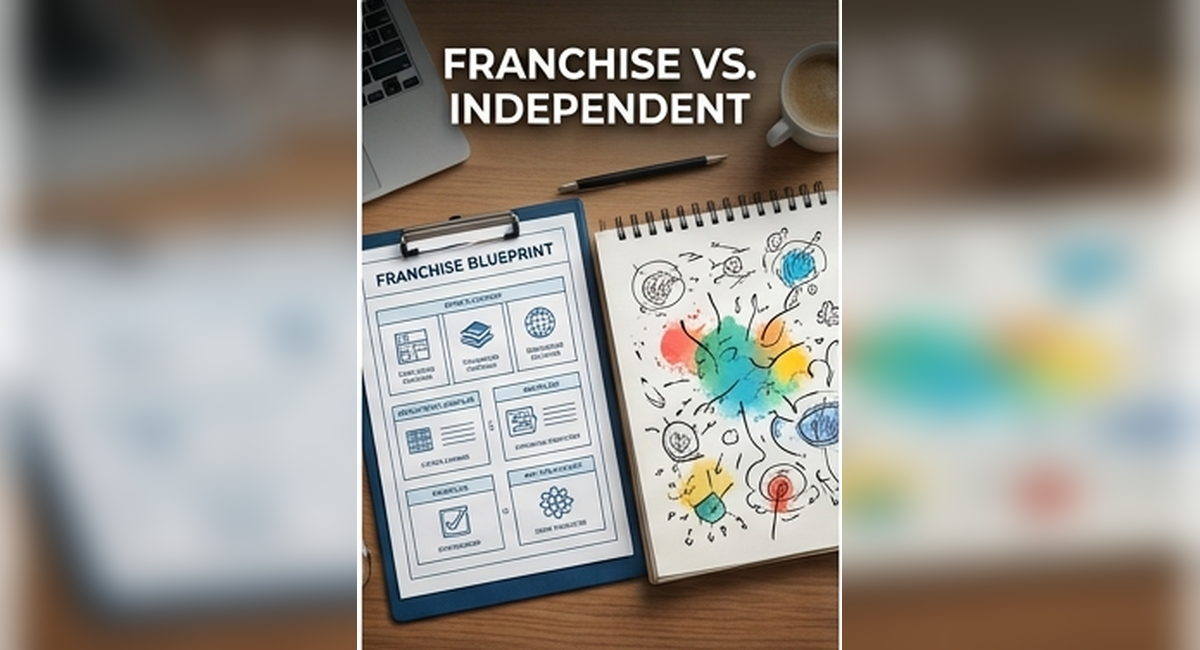
The ultimate objective of any significant business investment is a strong Return on Investment (ROI), but the definition of ‘fast’ ROI and the most efficient path to achieve it is the source of endless entrepreneurial debate. For those looking to own their own business, the primary decision lies between launching a new, independent concept or investing in a franchise system. While both paths offer opportunities, they approach the concept of ROI with fundamentally different risk-and-reward profiles, influencing how quickly that return can be realized.
An independent business provides the advantage of agility and the potential for exceptional growth if a unique idea captures market attention. The early ROI in this scenario is often heavily dependent on the owner’s ingenuity, grit, and ability to build a customer base from zero. There is total control and zero royalty payments. However, this total freedom comes with total exposure. The independent owner must create their own systems, brand identity, marketing strategies, and operational processes from scratch. The initial ramp-up can be long and costly, as every decision is untested and every customer relationship must be earned.
Conversely, a franchise system is designed to accelerate ROI by providing a proven, turn-key model. The primary driver of speed is the replication of a successful formula. Franchisees skip the critical, time-consuming phase of trial-and-error. They inherit established branding, operational guidelines, and, frequently, a recognizable name that can generate immediate traffic. Marketing efforts are also amplified through a collective network fund, allowing for greater reach than a solo operator. The franchisor’s established relationships with suppliers can offer better pricing on goods and equipment, further protecting early profit margins.
The tradeoff is control and ongoing costs. Franchisees are restricted in their operations, adhering strictly to corporate standards. Furthermore, recurring royalties and marketing contributions are a significant deduction from gross revenue. While the franchise model may reach stability and generating cash flow faster, the financial yield is clipped by these ongoing fees. The time to recover the full initial capital investment (break-even point), therefore, can be comparable between the two models, but the risk profile during that time is much lower for the franchise.
Ultimately, the ‘faster’ path to ROI is contingent upon the nature of the industry and the individual’s risk tolerance. If an entrepreneur is scaling a rapidly changing technological concept, independence might be faster. For a reliable, local service like food service, fitness, or cleaning, the established franchise model almost always delivers a stabilized cash flow much sooner. A franchise doesn’t guarantee a specific return, but its system is built to maximize the efficiency and speed of reaching profitability.
In conclusion, neither becoming a franchisee nor independent business ownership is universally superior for delivering a fast ROI. The franchise model is structured to reduce risk and compress the time required to establish a stable and profitable operation through proven systems and branding. Independent businesses offer the potential for faster breakthrough scaling and greater total upside, but with much higher failure rates and a much longer, more resource-intensive building phase. The investor must determine which profile matches their goals and capabilities.
