
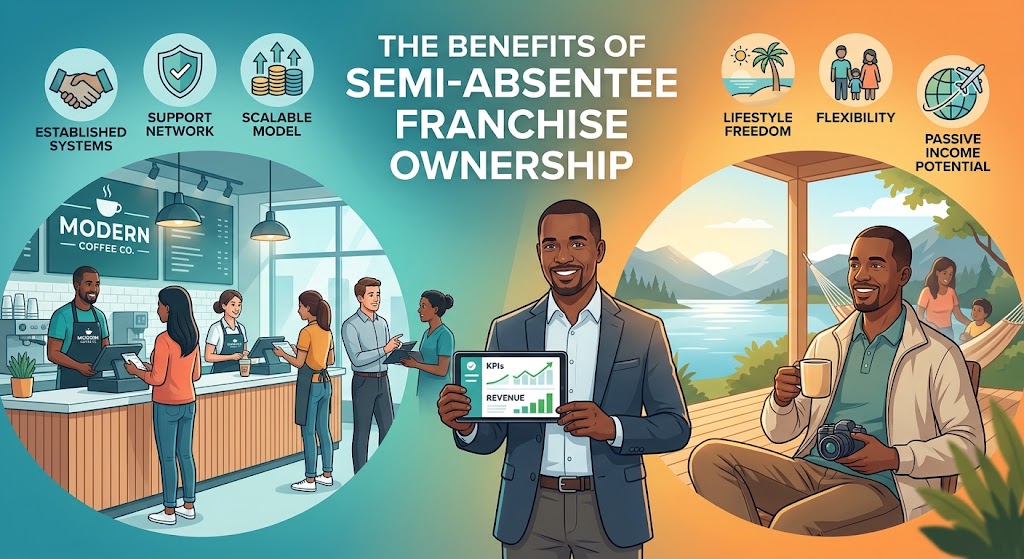
Owning a franchise can be an attractive way to build a business, but not everyone wants to manage daily operations full-time. Semi-absentee franchise ownership offers an alternative, allowing entrepreneurs to invest in an established business while maintaining other professional or personal commitments. With the right business model, management team, and support system, franchisees can oversee their investment without being involved in every day-to-day decision. Understanding the benefits of this approach can help prospective investors decide whether semi-absentee ownership aligns with their financial goals and lifestyle.
Greater Flexibility and Passive Income Potential
One of the main attractions of semi-absentee franchise ownership is the potential for greater flexibility. Rather than working full-time in the business, owners typically delegate daily responsibilities to a manager or trained team while focusing on higher-level decisions, performance monitoring, and long-term growth. This arrangement can be particularly appealing to people who already have a career, operate another business, or want more time for family and personal interests.
For investors interested in passive income generation, a semi-absentee franchise may offer an opportunity to earn business income without personally handling every operational task. However, it is important to recognise that this income is not entirely passive. Owners still need to monitor financial performance, maintain communication with their management team, and respond to challenges. Actual returns depend on the franchise model, operating costs, and the effectiveness of the people running the business.
The Opportunity to Diversify Income
Semi-absentee ownership can also provide a way to diversify income sources. Instead of relying solely on employment or a single business, an investor may own a franchise that generates revenue alongside their existing activities. This can help create additional financial opportunities over time, particularly if the business performs consistently and has room to expand.
However, diversification does not eliminate risk. Franchise owners must consider the initial investment, ongoing royalty fees, staffing expenses, and the possibility of slower-than-expected sales. Conducting thorough research and preparing realistic financial projections are essential steps before committing capital.
Established Systems and Franchisor Support
Another significant benefit is access to an established business model. Many franchise systems provide operational procedures, training, marketing resources, and guidance designed to help franchisees run their businesses more effectively. These systems can be especially valuable for owners who cannot be present throughout the working day.
A structured franchise model may also make it easier to train employees and delegate responsibilities. When the business has clear procedures and reliable reporting systems, owners can assess performance without needing to supervise every task personally. Nevertheless, the level of support varies between franchisors, so prospective buyers should investigate exactly what assistance is included.
Potential for Business Growth
Semi-absentee ownership may create opportunities to expand into additional territories or locations once the first franchise operates successfully. With an experienced management team and strong financial controls, owners can potentially focus on strategic planning rather than being tied to a single location.
Expansion should be approached carefully, as managing multiple franchises introduces additional costs and complexity. Building a stable foundation before growing is essential.
Final Thoughts
Semi-absentee franchise ownership can offer flexibility, potential additional income, established systems, and opportunities for expansion. However, success depends on selecting the right franchise, recruiting capable managers, and remaining actively involved in overseeing performance. By understanding both the benefits and responsibilities, investors can make more informed decisions about whether this ownership model suits their ambitions, resources, and preferred lifestyle.
